Lay perceptions of psychology: The (mis)match between lay beliefs and explanatory stances
Abstract
People do not think that all psychological phenomena are equally explainable through science: Psychological phenomena associated with a high first-person subjective experience (henceforth, FPSE; i.e. associated with a strong phenomenological experience) are considered less scientifically explainable than low-FPSE psychological phenomena (i.e. those lacking such phenomenological quality). We contrast two possible accounts for this finding: 1) a generalized tendency to consider high-FPSE phenomena less explainable through science, and 2) a tendency to evoke a specific type of scientific explanation, more closely aligned with people’s beliefs about the nature of low-FPSE phenomena, that makes those phenomena be perceived as more explainable by science. Across two studies, participants considered different explanatory stances (as posited in the philosophy of mind literature: intentional, design/functional, and physical/implementational) and reported the extent to which these could explain low- and high-FPSE phenomena. In Study 1, participants considered low-FPSE phenomena more explainable, and rated implementational explanations as better than intentional ones (but these did not interact). In Study 2, intentional and implementational explanations were deemed more appropriate to address high- and low-FPSE phenomena, respectively. Taken together, these results may suggest that both accounts can accommodate the higher explainability beliefs of low-FPSE phenomena, and that the fit between the characteristics of the explanation and of the phenomenon is considered when people are looking for the best scientific explanation.
Add the publication’s full text or supplementary notes here. You can use rich formatting such as including code, math, and images.
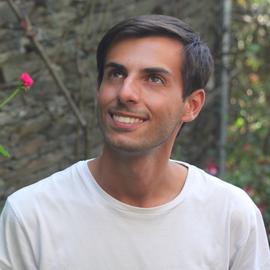
Francisco Cruz
Assistant Professor
Francisco Cruz is an assistant professor in Cognitive Psychology at Ispa - Instituto Universitário. Junior Consulting Editor at the Journal of European Social Psychology, 2025-present. Invited assistant professor at Faculdade de Psicologia, Universidade de Lisboa (2026), and Faculdade de Ciências da Saúde, Universidade Europeia (2025-2026). Social Psychology Ph.D. on lay beliefs about science, supervised by Prof. André Mata (Universidade de Lisboa) and Prof. Tania Lombrozo (Princeton University), 2022-2025. Visiting Student Research Collaborator at Princeton University, 2023-2024. Society for General Psychology and Interdisciplinary Inquiry, Fulbright Portugal, and Fundação para a Ciência e Tecnologia awardee. His research interests include lay beliefs about science (i.e., what people believe that science can or cannot explain and why), motivated beliefs in science (i.e., the contexts in which people are more prone to accepting scientific explanations), representation of social groups (i.e., how people integrate information to provide judgments on shared homogeneity vs. heterogeneity across group members), epistemic trespassing (i.e., when people provide judgments on domains beyond those in which they are experts), intuitive mind-body dualism (i.e., a natural tendency to see the world as split in material and immaterial portions), and face perception (i.e., features driving the advantage in recall for own- vs. other-race faces).