Motivated bias blind spot: People confess to more or less bias depending on its desirability
Abstract
Though people readily claim that others fall prey to several biases, they are less likely to recognize those same biases in themselves – a tendency termed bias blind spot (Pronin et al. in Personality Social Psychol Bull 23:369–381, 2002). The bias blind spot is believed to emerge due to people’s overreliance on introspection for assessing their biases (which is unlikely to turn up evidence of bias), while bias in other people is ascribed based on their behaviors. Many biases, however, are perceived as negative and thus the bias blind spot may reflect the desire to see oneself in a positive light. Moreover, not all biases are necessarily undesirable, and thus people may be motivated to admit to biases that are considered desirable. We explore this motivational account for the bias blind spot by manipulating bias desirability within- and across-biases. Participants report a smaller bias blind spot after reading a bias description that focuses on its positive outcomes, relative to when the same description details its negative consequences (Study 1). We obtain convergent evidence when considering perceptions of bias desirability (Study 2): The more a person rates a bias as desirable, the less bias blind spot they report for it. Implications are discussed with regard to what constitutes an adaptative bias – namely that a bias can be considered an error from the logical standpoint and nevertheless be socially advantageous and thus adaptive.
Add the publication’s full text or supplementary notes here. You can use rich formatting such as including code, math, and images.
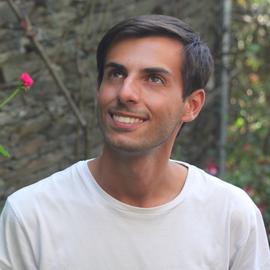
Francisco Cruz
Assistant Professor
Francisco Cruz is an assistant professor in Cognitive Psychology at Ispa - Instituto Universitário. Junior Consulting Editor at the Journal of European Social Psychology, 2025-present. Invited assistant professor at Faculdade de Psicologia, Universidade de Lisboa (2026), and Faculdade de Ciências da Saúde, Universidade Europeia (2025-2026). Social Psychology Ph.D. on lay beliefs about science, supervised by Prof. André Mata (Universidade de Lisboa) and Prof. Tania Lombrozo (Princeton University), 2022-2025. Visiting Student Research Collaborator at Princeton University, 2023-2024. Society for General Psychology and Interdisciplinary Inquiry, Fulbright Portugal, and Fundação para a Ciência e Tecnologia awardee. His research interests include lay beliefs about science (i.e., what people believe that science can or cannot explain and why), motivated beliefs in science (i.e., the contexts in which people are more prone to accepting scientific explanations), representation of social groups (i.e., how people integrate information to provide judgments on shared homogeneity vs. heterogeneity across group members), epistemic trespassing (i.e., when people provide judgments on domains beyond those in which they are experts), intuitive mind-body dualism (i.e., a natural tendency to see the world as split in material and immaterial portions), and face perception (i.e., features driving the advantage in recall for own- vs. other-race faces).