Abstract
Large Language Models (LLMs) have been shown to be highly persuasive, but when and why they outperform humans is still an open question. We compare the persuasiveness of two LLMs (Claude 3.5 Sonnet and DeepSeek v3) against humans who had incentives to persuade, using an interactive, real-time conversational setting. We demonstrate that LLMs persuasive superiority is context-dependent: it depends on whether the persuasion attempt is truthful (towards the right answer) or deceptive (towards the wrong answer) and on the LLM model, and wanes over repeated interactions (unlike human persuasiveness). In our first large-scale experiment, humans vs LLMs (Claude 3.5 Sonnet) interacted with other humans who were completing an online quiz for a reward, attempting to persuade them toward a given (either correct or incorrect) answer. Claude was more persuasive than incentivized human persuaders both in truthful and deceptive contexts and it significantly increased accuracy if persuasion was truthful, but decreased it if persuasion was deceptive. In a follow-up experiment with Deepseek v3, we replicated the findings about accuracy but found greater LLM persuasiveness only if the persuasion was deceptive. Linguistic analyses of the persuaders texts suggest that these effects may be due to LLMs expressing higher conviction than humans.
Add the publication’s full text or supplementary notes here. You can use rich formatting such as including code, math, and images.
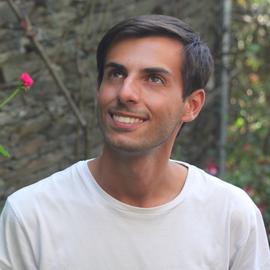
Francisco Cruz
Assistant Professor
Francisco Cruz is an assistant professor in Cognitive Psychology at Ispa - Instituto Universitário. Junior Consulting Editor at the Journal of European Social Psychology, 2025-present. Invited assistant professor at Faculdade de Psicologia, Universidade de Lisboa (2026), and Faculdade de Ciências da Saúde, Universidade Europeia (2025-2026). Social Psychology Ph.D. on lay beliefs about science, supervised by Prof. André Mata (Universidade de Lisboa) and Prof. Tania Lombrozo (Princeton University), 2022-2025. Visiting Student Research Collaborator at Princeton University, 2023-2024. Society for General Psychology and Interdisciplinary Inquiry, Fulbright Portugal, and Fundação para a Ciência e Tecnologia awardee. His research interests include lay beliefs about science (i.e., what people believe that science can or cannot explain and why), motivated beliefs in science (i.e., the contexts in which people are more prone to accepting scientific explanations), representation of social groups (i.e., how people integrate information to provide judgments on shared homogeneity vs. heterogeneity across group members), epistemic trespassing (i.e., when people provide judgments on domains beyond those in which they are experts), intuitive mind-body dualism (i.e., a natural tendency to see the world as split in material and immaterial portions), and face perception (i.e., features driving the advantage in recall for own- vs. other-race faces).